

I became a teacher by accident
I had returned to Lima to be with my mother, who had a terminal illness. I needed a job, so I went to visit my mentor, the Technology Director at the American School of Lima.
I had worked as his assistant a few years earlier. He knew me, knew my background, and knew I was also a designer. I hoped he could point me in the right direction.
He picked up the phone and called the High School principal.
“Hey Chris? I think I found the solution for your Design Technology problem.”
That was a little more direction than I had expected.
The school had a Design Technology program and needed teachers who could teach it. A friend of mine who taught P.E. was going to take over the class. He was relieved when I stepped in.
I was very glad to have a job. I was also worried.
My experience in front of a classroom was limited, and now I had to stand there and deliver. Knowing a subject and being responsible for a room full of students learning it suddenly felt like two very different things.
Fortunately, I joined an experienced team. The head of the team was a great teacher, and we became friends. We still are.
I had students to guide, but I also had people guiding me.
The view from the other side
Working with students was an eye-opening experience.
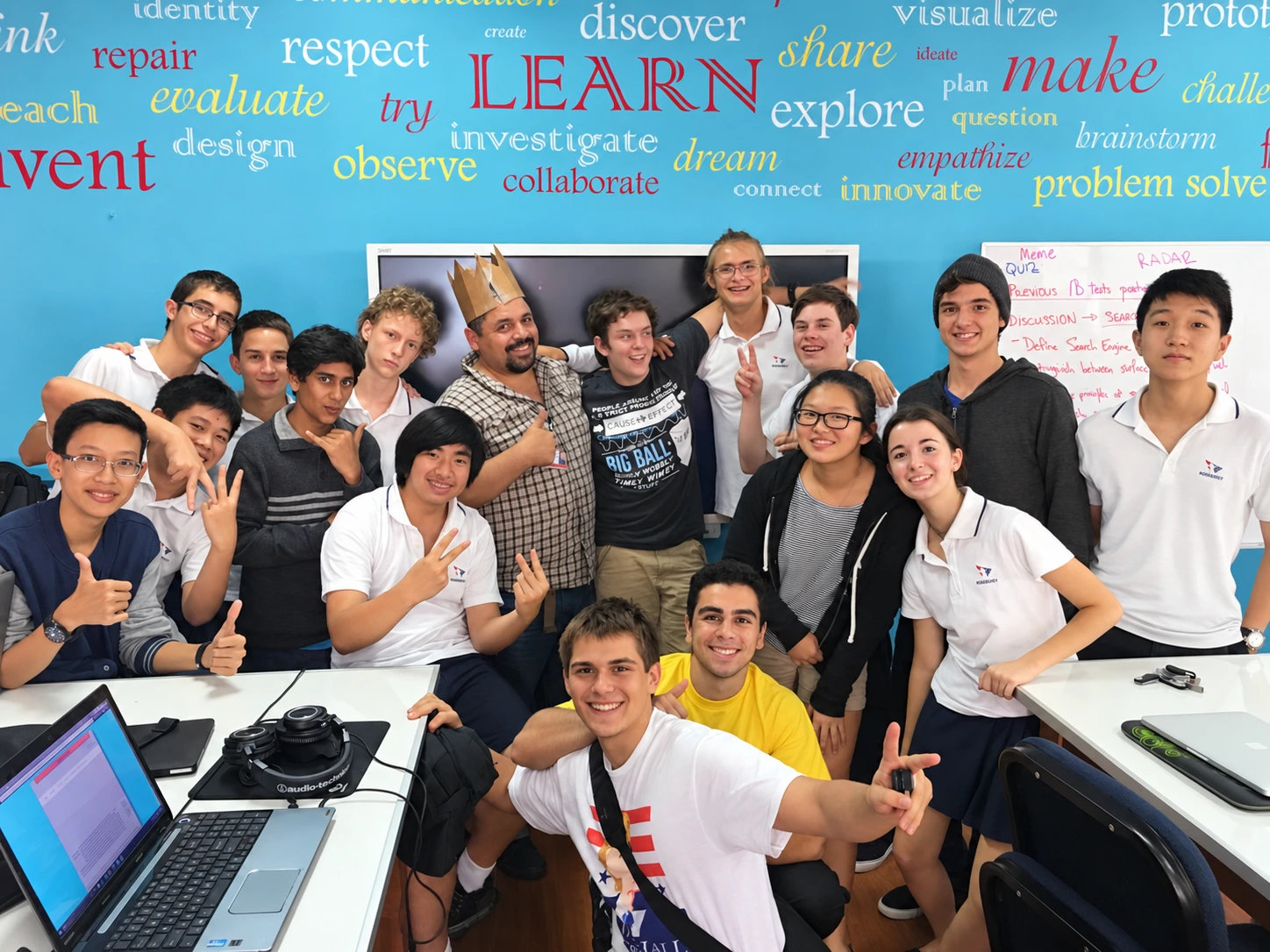
I had once sat in those same classrooms, carrying the energy and mischief that come with being a tween or teenager. Now I was facing the room from the other side.
That changes your perspective.
Something that helped was that my inner child was—and still is—very much alive. I could relate to some of their energy. I remembered what it felt like to be their age.
There was still chaos. A connection with your inner child does not magically produce a quiet classroom.
But the students came to like and appreciate me, and I appreciated them.
After a few weeks, something important became clear: they weren’t looking for another friend. They needed a guide.
They needed someone who had already walked a little further down the path and could help them understand what came next, in terms that made sense to them.
Being relatable helped me reach them. It didn’t remove my responsibility to lead.
Fair didn’t always mean easygoing
I don’t want to make it sound as though every class was a peaceful gathering of curious young minds.
I would not tolerate nonsense, and sometimes I had to be firm. There were expectations, limits, and moments when I had to bring the room back under control.
But I tried to be fair.
I could enjoy the students’ personalities without letting everything slide. I could understand where some of the mischief came from and still tell them it was time to stop.
That was part of learning to be their teacher.
First, understand it yourself
Preparing a class forced me to ask a useful question: did I actually understand what I was about to teach?
Before I could explain something clearly to students, I needed to be clear about it myself.
Design Technology gave us the advantage of working with our hands. I tried to keep the abstract part of a lesson short, simple, and visual. Then we would spend the rest of the period doing the work.
Understanding often came through doing.
An explanation gave us a starting point. Building something gave students a way to work through it, make mistakes, and see what happened.
It also gave me a better chance to see where someone was struggling than I would have had from simply asking, “Does everyone understand?”
Looking back with different eyes
The students taught me something about myself: I could be a guide for young people.
I didn’t have to put away the part of me that remembered being a child. I needed to look at that part through the eyes of someone who had lived, worked, made mistakes, and learned a few things along the way.
That combination helped me connect with them while remembering that I was responsible for more than being liked.
I had something to offer. I was also still learning how to offer it.
We keep needing teachers
One lesson from teaching has stayed with me: we are all constantly learning.
Very much including me.
We need teachers and mentors at different stages of our lives. Sometimes we need someone to explain a skill. Sometimes we need a different perspective, a little direction, or an honest challenge to the way we are thinking.
Accepting that takes humility.
I think back to the visit that started my teaching career. I went to someone I trusted because I needed help finding my next step. Years later, I can see how appropriate that beginning was.
I became a teacher with the help of a mentor.
Teaching gave me another reason to appreciate having one.