
An opportunity between classes
In 2014, I was teaching web design at Toulouse Lautrec in Peru when someone at the institute approached me about a project.
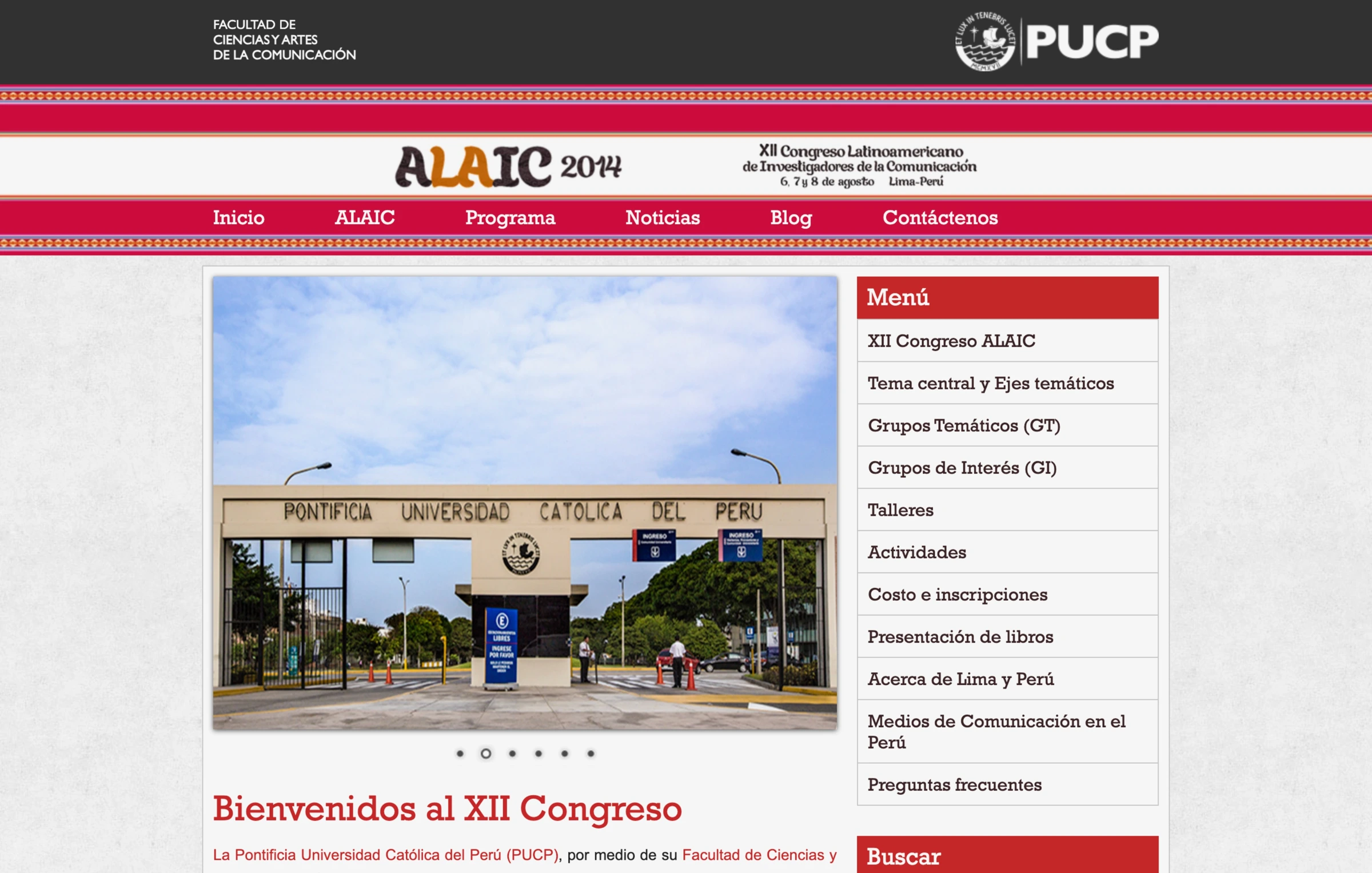
The Asociación Latinoamericana de Investigadores de la Comunicación—ALAIC—was holding its 12th Congress at the Pontificia Universidad Católica del Perú in Lima, and the event needed a website.
I passed along my contact information. A few days later, a university representative got in touch, and the conversation turned into a project I would handle from start to finish.
More than an event announcement
The website needed to do considerably more than tell people when to show up.
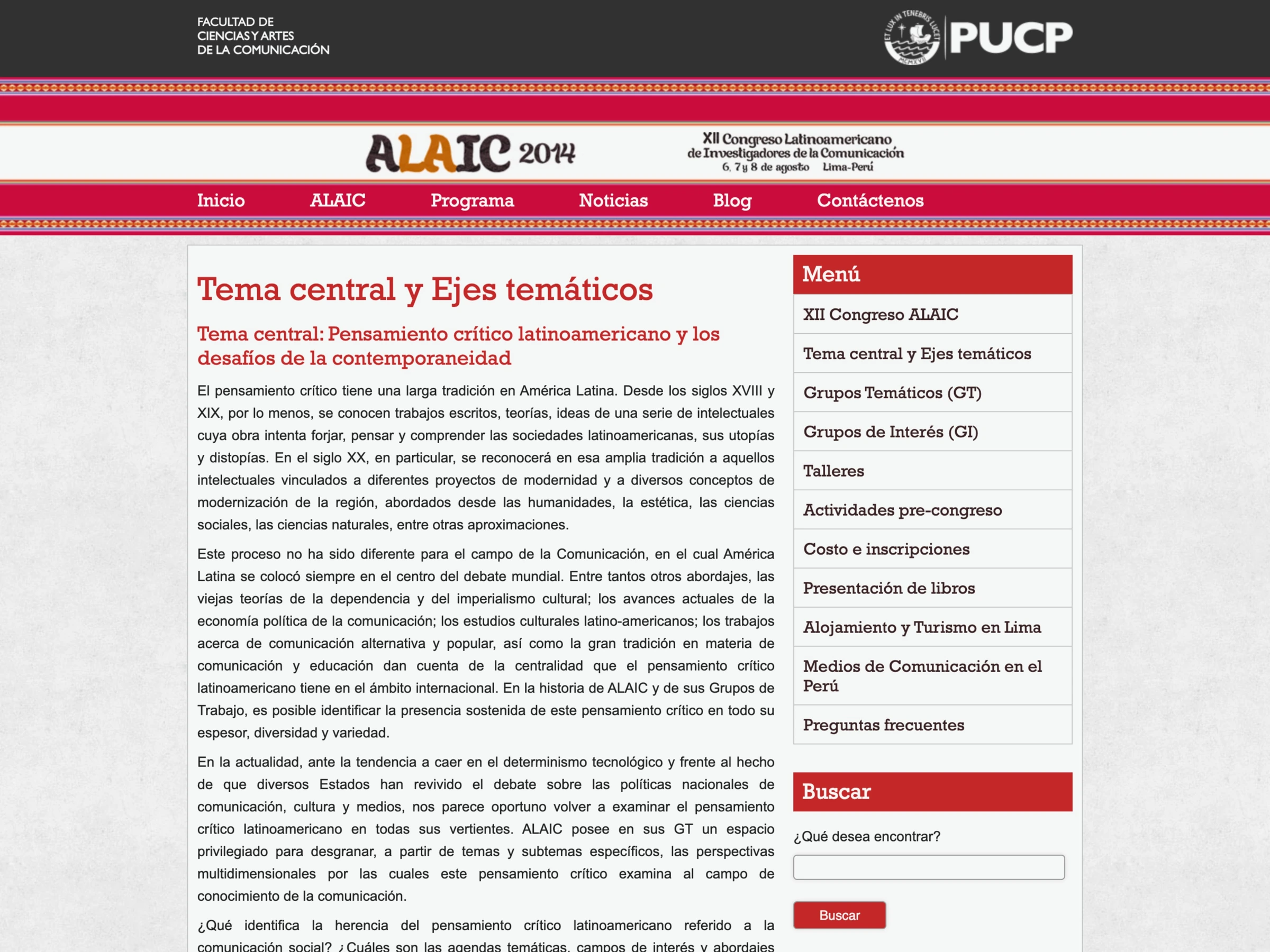
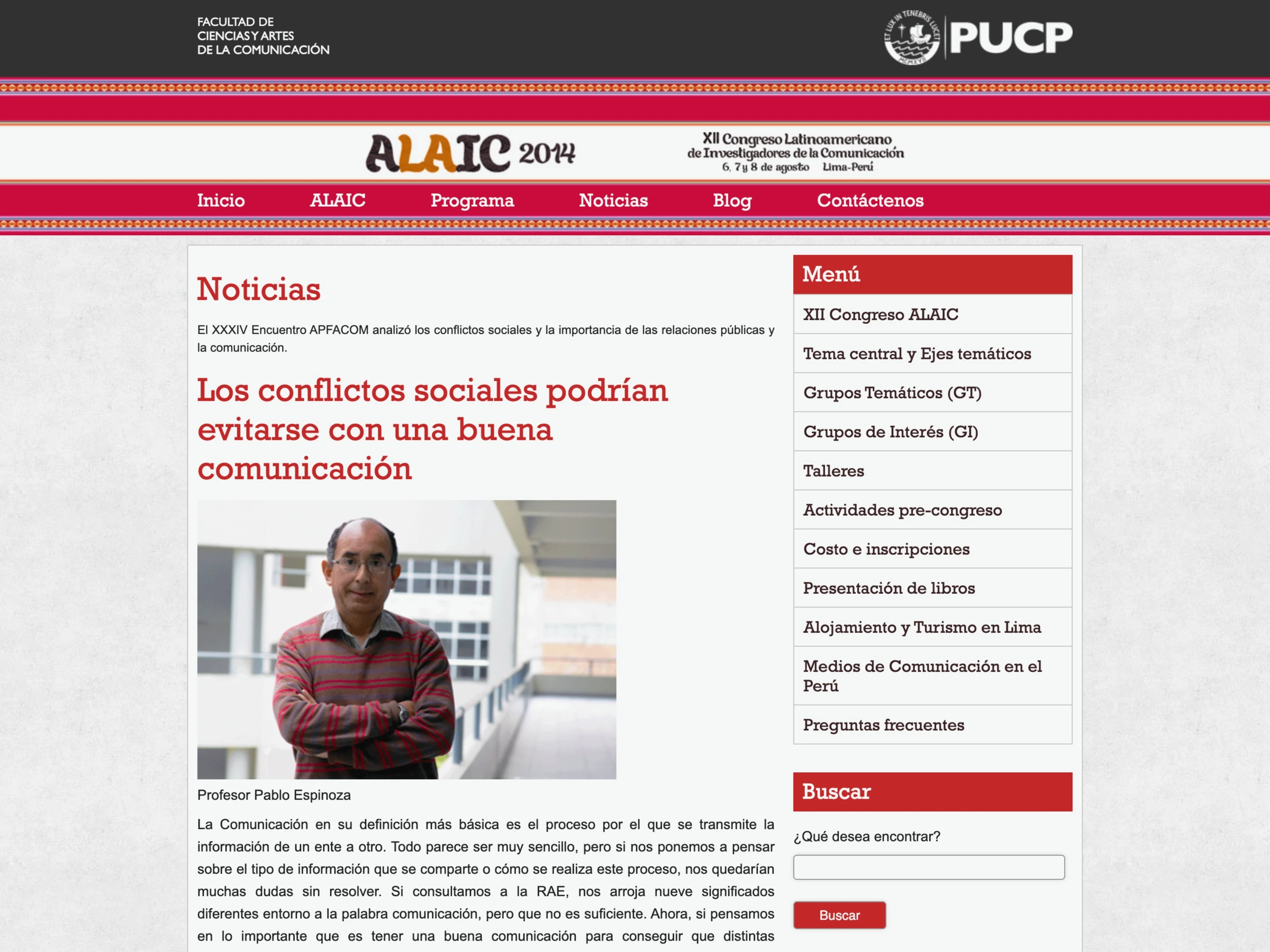
It would be the central reference point for the congress: schedules, session locations around campus, costs, registration information, and the details participants needed to plan their visit. Since people would be arriving from other countries, it also included information about Lima and things to see and do while they were there.
The plan extended beyond the event itself. The website was also intended to become a permanent archive of its activities and workshops.
I built it in WordPress so the organizers could keep the information moving without depending on me for every change.
Getting the schedule to cooperate
The most demanding part was finding and adapting the right plugins and systems for the event schedules and calendars.
A calendar sounds simple until it needs to handle a real program, connect activities with locations, work for the people entering the information, and make sense to the people reading it. Doing that in a language other than English added another layer to the work.
I handled the design and development myself, including the adjustments needed to bring those pieces together. There was also the handoff to the university’s IT team, making sure the website could run within their server requirements.
Making it theirs
A website like this only works if the people responsible for it can actually use it.
I trained the organizers to add, edit, and remove content and media. They picked it up quickly, which meant they could manage the information themselves as the event approached.
The site was well received, and the relationship continued beyond the congress: one of the organizers later hired me privately for additional work.
That was a particularly satisfying outcome. Delivering the website was one thing; earning enough trust to be asked back was another.
What stayed with me
This project brought together several things I enjoy: designing a website, solving practical technical problems, and helping other people feel comfortable using what I’d built.
It also connected my work as a developer with my work as a teacher. Building the system mattered, but so did explaining it clearly enough for someone else to take over.
For me, that’s an important part of finishing a project: leaving people with something they can use, understand, and make their own.